
What to Do If Your Jacket Patch Starts to Peel or Loosen
A peeling patch is one of the most frustrating things that can happen to a custom jacket. You've invested in something that was supposed to last, and now the corner of your chenille letter or embroidered badge is starting to lift. Before you write it off, the good news is: in most cases, this is completely fixable. Here's how.
First, Understand Why It's Happening
Not all patches are applied the same way, and the cause of peeling affects the fix. The most common reasons a patch starts to lift are:
Heat damage
Patches applied with heat-activated adhesive can begin to lift if the jacket has been washed on too high a temperature or tumble dried. The adhesive bond breaks down with repeated heat exposure.
Edge wear
The edges of a patch — particularly corners — are the first to lift because they experience the most stress from movement and wear. Even well-applied patches can start to lift at the edges after extended heavy use.
Incorrect application
If a patch wasn't applied with sufficient pressure, heat, or time during the original application, the adhesive bond was never fully set and will fail sooner than expected.
Moisture
Repeated washing or prolonged dampness can weaken both the adhesive and the backing of a patch over time.
What Not to Do
Before the fix, here's what to avoid. Don't pull the patch further off — this tears the fibres of the jacket body fabric underneath and makes repair much harder. Don't apply standard craft glue or super glue — these are too rigid when dry and will cause the patch to crack and look worse. Don't iron directly onto the patch without a protective cloth — this can melt synthetic fibres in the patch and cause irreversible damage.
Fix Option 1: Fabric Bond Adhesive (For Small Lifts)
If it's just a corner or edge that's lifting and the rest of the patch is secure, a fabric bond adhesive (also called fabric glue or hem tape) is the easiest fix. Apply a small amount under the lifting edge, press firmly and hold for 30-60 seconds, then place a heavy book or flat weight on top while it sets (usually 10-15 minutes). Most fabric adhesives are wash-resistant when fully cured, so they'll hold through subsequent cleaning.
Fix Option 2: Re-Ironing (For Heat-Applied Patches)
If your patch was originally applied with heat-activated adhesive, re-ironing can re-activate the bond. Place a thin cotton cloth between the iron and the patch to protect the fabric, and apply firm pressure with a medium-hot iron for 15-20 seconds. Do not move the iron while pressing. The heat reactivates the adhesive and the pressure resets the bond. Let it cool flat before moving the jacket.
Fix Option 3: Stitch It Down (Permanent Solution)
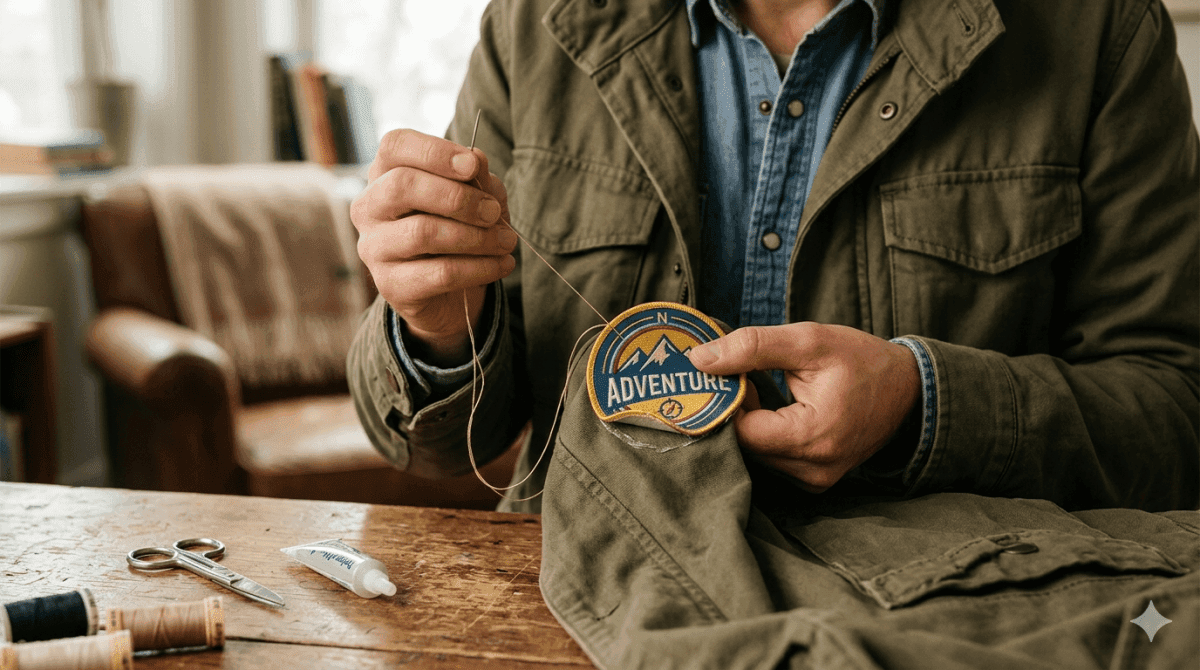
If the patch keeps lifting after adhesive fixes, the most reliable long-term solution is to have it stitched down around the perimeter. A local tailor or seamstress can do this in minutes. Stitching around the edge not only secures the patch permanently but also looks intentional and adds a premium, professional finish.
When to Contact Your Jacket Supplier
If the patch starts peeling within a few weeks of receiving a new jacket — before any washing or heavy use — that's a quality issue that your supplier should address. Document it with photographs (close-up of the lifting area, plus a wider shot showing the full jacket) and get in touch promptly.